
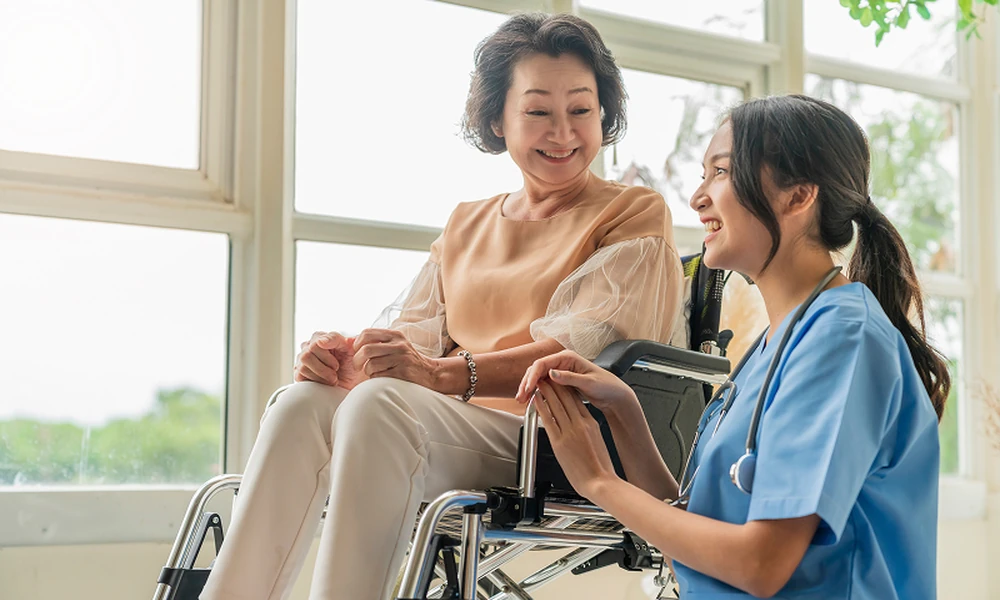
Image Recommendation: A caregiver gently assisting an elderly woman to stand from a chair, both making eye contact, warm natural light.
Hiring a maid to help with an elderly parent and hiring a caregiver for one can sound like the same decision described two different ways. In practice, they’re often two different roles, with different training behind them, and mixing the two up is one of the more common reasons a placement doesn’t end up fitting what a family actually needs.
Where the Overlap Genuinely Exists
A general domestic helper and an elderly caregiver in Singapore can both help around a household, and for a senior who’s largely independent and just needs company, light housekeeping, and meal preparation, that overlap is often enough. The distinction starts to matter once personal care, mobility support, or a medical condition requiring specific handling enters the picture, which is a different skill set than general housework, whatever the job title on the placement happens to say.
What Dedicated Caregiver Training Actually Covers
- Safe transfer and mobility techniques, including for a senior at risk of falls or recovering from a fracture or stroke.
- Medication reminders and basic health monitoring, without crossing into clinical tasks reserved for a nurse.
- Dementia-specific communication and de-escalation, which differs substantially from general caregiving.
- Personal hygiene and incontinence care delivered with dignity, a skill that takes deliberate training to do well.
A Quick Gut-Check Before Choosing Either Option
- If the need is company, light meals, and tidying, a general domestic helper is often genuinely sufficient.
- If the need includes mobility assistance, a diagnosed condition, or post-hospital recovery, dedicated caregiver training stops being optional.
- When unsure which category a situation falls into, a short needs assessment with an agency tends to settle it faster than guessing.
Why This Distinction Gets Blurred So Often
Job listings and casual conversation both tend to use ‘maid’ and ‘caregiver’ almost interchangeably, which makes sense in everyday speech but causes real friction when a family is trying to match a placement to an actual care situation. A general helper asked to take on tasks they were never trained for isn’t being lazy or incompetent; they simply weren’t equipped for a role they didn’t apply for, and the mismatch usually surfaces at the worst possible time, during a fall, a medical scare, or a sudden decline rather than during the calm of an interview.
What Happens When a Senior’s Needs Change Partway Through
A placement that made sense a year ago doesn’t always stay the right fit, since an elderly parent’s needs tend to shift gradually rather than all at once. Someone hired initially for light housekeeping and company can end up quietly taking on more hands-on responsibilities as mobility or memory declines, often without anyone formally revisiting whether the role still matches the training behind it. Building in a periodic check-in, rather than waiting for a crisis to force the conversation, tends to catch that drift while it’s still an easy adjustment rather than an urgent one.
Matching the Role to What’s Actually Needed
A maid for elderly care placement works best when the scope is defined honestly from the start, general support versus hands-on caregiving, rather than assumed and adjusted after something goes wrong. Being specific about mobility level, cognitive status, and any medical conditions during the matching conversation tends to produce a far better long-term fit than leaving those details for the caregiver to discover on the job.
Language and Cultural Fit Matter Alongside Skill
Technical training covers only part of what makes a placement work day to day. A caregiver who can communicate comfortably in a senior’s preferred language or dialect, and who understands the small cultural habits around meals, routines, and respect for elders, often ends up mattering just as much as formal qualifications once the placement actually begins. This is a detail worth raising explicitly during matching rather than assuming it’ll sort itself out once someone’s already moved in.
The right hire was never really about the label on the role. It’s about whether the person stepping into a home has actually been trained for the specific kind of support an elderly family member needs, and whether that was made clear before the placement started rather than afterwards.
Working out whether a situation calls for general help or dedicated caregiver training is easier with a proper needs conversation than a guess. Contact Top Faith to talk through what would actually fit.
